
A Proven Solution That Still Sparks Debate
Why Steel Fibre Reinforced Concrete Still Divides Opinion in the US
Published on 9 June 2026
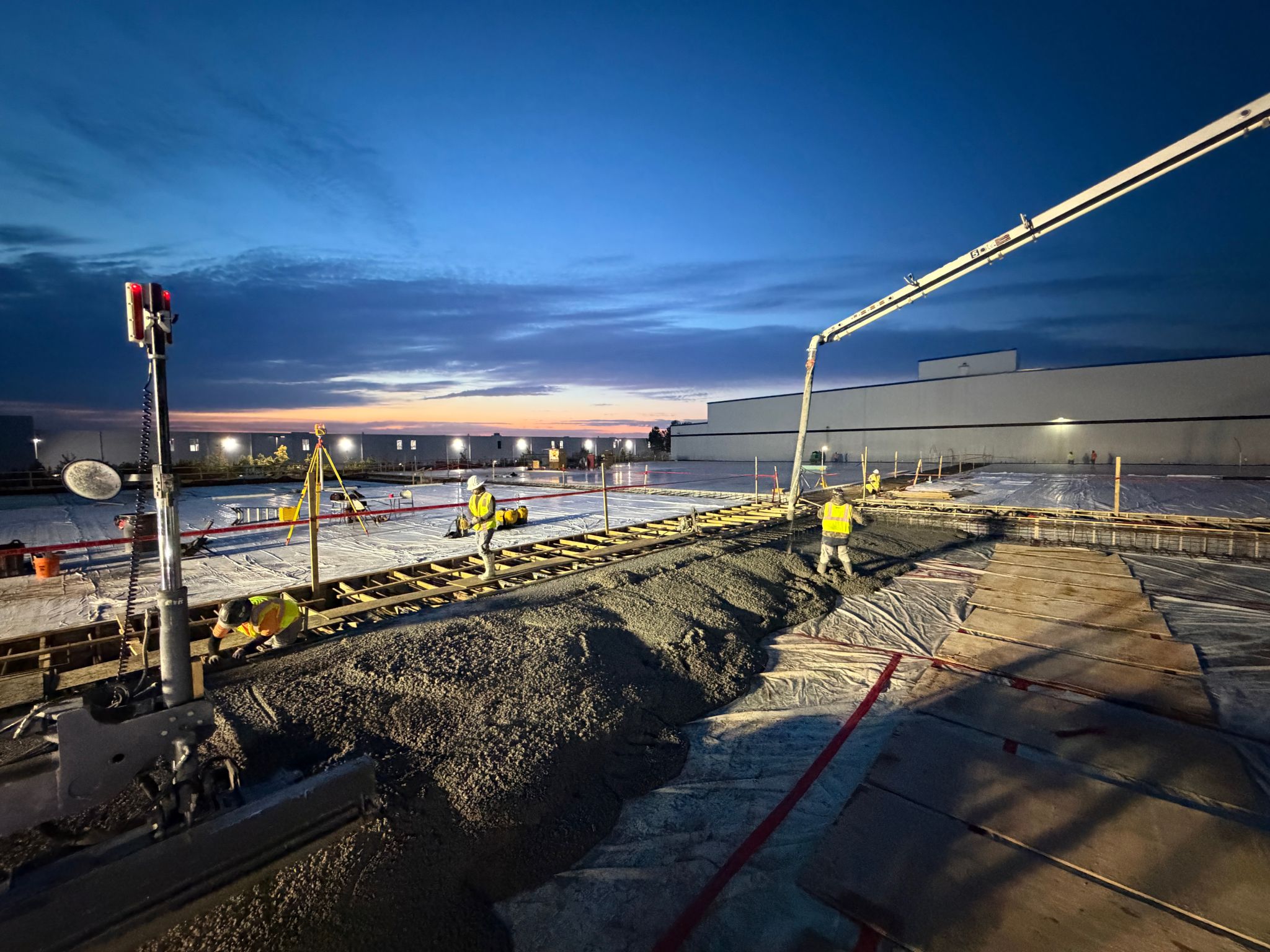
Steel fibre reinforced concrete (SFRC) has been used successfully in industrial flooring projects across Europe for decades. Yet in the United States, it still generates mixed opinions.
Some developers, contractors and operators see SFRC as a proven solution capable of delivering durable, high-performance industrial floors with fewer joints and improved long-term performance. Others remain cautious, often based on experiences from earlier projects where the results did not meet expectations.
So why does the same technology receive such different reactions?
In most cases, the answer is not the steel fibre itself. It is how the flooring system is designed, engineered and delivered.
Growing Demand for Higher-Performance Floors
Industrial facilities are changing rapidly.
Across the United States, warehouses and logistics centres are becoming larger, busier and increasingly automated. Developers are building facilities with higher rack loads, faster material handling systems, narrower aisles and greater demands on floor flatness and durability.
As a result, the floor slab is playing a more important role than ever before.
Owners are looking for solutions that can support operational performance while reducing construction time, minimising maintenance and improving long-term value. This is one of the reasons steel fibre reinforced concrete continues to gain traction throughout the market.
When properly engineered, SFRC can provide several advantages, including:
- Reduced slab thickness
- Faster construction programmes
- Fewer joints
- Improved crack control
- Enhanced fatigue performance
- Reduced maintenance requirements
- Long-term operational durability
These benefits have made SFRC a popular choice for warehouses, distribution centres, manufacturing facilities and automated storage systems around the world.
Where the Mixed Reputation Comes From
The reality is that some early SFRC projects in the US market struggled to achieve the desired results.
In many cases, steel fibres were viewed simply as an alternative reinforcement product rather than part of a complete engineered flooring system. Projects were sometimes approached using conventional concrete practices without fully accounting for how steel fibres influence concrete behaviour during mixing, placement and finishing.
This occasionally led to issues such as inconsistent fibre distribution, surface imperfections or challenges during installation.
While these experiences contributed to industry scepticism, they do not reflect the performance of modern engineered SFRC systems.
Today, advances in concrete technology, fibre design, placement equipment and quality control have significantly improved how steel fibre floors are delivered and managed.
SFRC Is More Than Just Adding Fibres
One of the most common misconceptions is that steel fibre reinforced concrete is simply conventional concrete with fibres mixed into the load.
In reality, successful SFRC projects rely on careful engineering from the earliest design stages through to final construction.
Factors such as fibre dosage, concrete mix design, pumping requirements, placement methodology and finishing techniques all need to work together as part of a coordinated system.
Achieving consistent fibre distribution is particularly important. When fibres are properly dispersed throughout the concrete, they provide the reinforcement performance required to control cracking and support long-term slab durability.
This is why experienced SFRC specialists place significant emphasis on concrete technology, batching procedures and quality control throughout the construction process.
The Importance of Floor Finishing
For industrial facilities, the floor surface is not simply a construction element. It is a critical operational asset.
Forklifts, automated guided vehicles, robotics and material handling equipment interact with the floor every day. Even small variations in surface quality can affect efficiency, maintenance requirements and long-term performance.
That is why finishing quality is just as important as structural design.
Modern SFRC construction combines optimised concrete mixes, specialist placement techniques, advanced screeding equipment and rigorous quality assurance procedures to achieve the required floor tolerances.
When these elements are properly managed, steel fibre reinforced concrete floors can meet the demanding requirements of modern logistics and automation facilities.
Engineering Makes the Difference
The most successful SFRC projects share one common characteristic: they are treated as engineered flooring solutions rather than simple material substitutions.
Steel fibre reinforced concrete is not a shortcut. It requires expertise in structural design, concrete technology, construction methodology and quality control.
When these disciplines are combined, SFRC can deliver exceptional performance and significant value throughout the life of a facility.
As industrial buildings continue to evolve, this engineering-led approach is becoming increasingly important.
Looking Ahead
The demand for larger, more efficient and more automated facilities is only expected to grow across the United States.
Developers need flooring systems capable of supporting these operational demands while also helping control construction schedules and lifecycle costs.
Steel fibre reinforced concrete is proving to be an effective solution for many of these challenges.
The question is no longer whether SFRC works. Across thousands of successful projects worldwide, the answer to that has already been established.
The real question is whether the project team has the expertise to design and deliver the system correctly.
Speak with Twintec USA
Twintec delivers steel fibre reinforced concrete flooring systems engineered specifically for industrial and logistics environments across the United States.
Our Design, Build & Guarantee approach combines specialist engineering, advanced construction techniques and proven delivery expertise to create floors designed for operational life.
If you are evaluating flooring options for an upcoming warehouse, manufacturing or logistics facility, speak with our engineering team about the right solution for your project.